
Nursing Home Neglect Lawyer
Work with the best 24/7. Maximize your compensation.
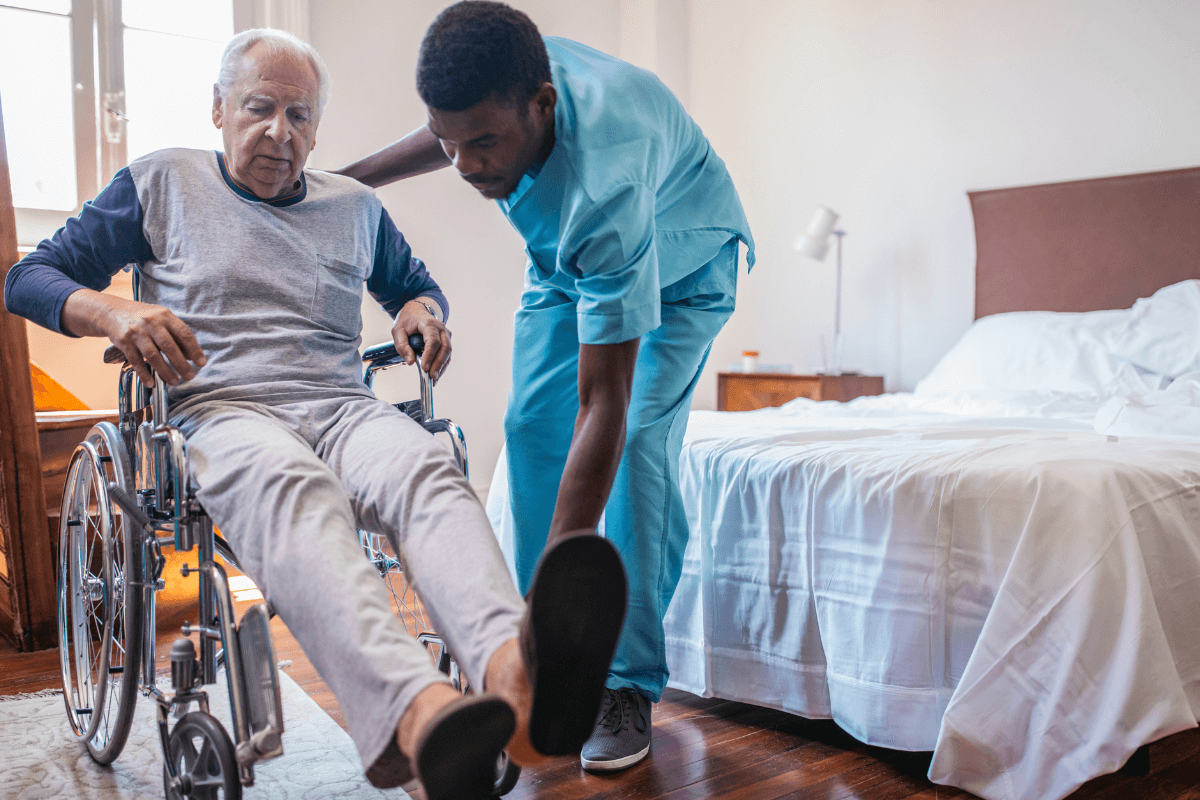
Nursing Home Neglect Lawyer in Las Vegas
Placing a family member in a nursing home is one of the most difficult decisions you’ll ever make. You trust these facilities to provide compassionate, attentive care when your loved one can no longer live independently. When that trust is broken through neglect, the consequences can be devastating and sometimes fatal.
If you’ve noticed disturbing changes in your elderly family member—unexplained weight loss, bedsores, falls, or personality changes—you may be witnessing nursing home neglect. Understanding the warning signs, knowing your legal rights under Nevada law, and taking swift action can protect your loved one from further harm and hold negligent facilities accountable.
Were you or a loved one seriously injured by negligence? Call or text John at Bemis Law Group for a free no-obligation, confidential, consultation at (702) 637-3333.


What Is Nursing Home Neglect?
Nursing home neglect occurs when staff members fail to provide adequate care to meet residents’ basic needs. Unlike abuse, which involves intentional harm, neglect typically results from understaffing, inadequate training, poor management, or indifference to residents’ wellbeing.
Nevada law requires nursing homes to provide proper nutrition, hydration, medical care, hygiene assistance, mobility support, and monitoring to prevent injuries. When facilities cut corners to maximize profits, residents suffer preventable harm that constitutes medical malpractice and negligence.
Warning Signs Your Loved One Is Being Neglected
Recognizing neglect early can prevent minor problems from becoming life-threatening conditions. Family members should watch for these red flags during visits to Las Vegas nursing homes.
Bedsores and Pressure Ulcers
Bedsores represent one of the most common and serious signs of nursing home neglect. These painful wounds develop when residents are left sitting in wheelchairs or lying in beds without being repositioned regularly. Stage 1 bedsores are preventable with proper care, but neglect allows them to progress to stage 4, where they penetrate deep into muscle and bone, causing infections, sepsis, and death.
If your loved one has developed bedsores, especially advanced stages, this indicates staff are not performing basic repositioning duties every two hours as required.
Significant Weight Loss and Malnutrition
Sudden or unexplained weight loss signals that residents aren’t receiving adequate nutrition. Neglectful nursing homes may serve insufficient portions, fail to help residents who need feeding assistance, or ignore dietary requirements for residents with swallowing difficulties or special needs.
Watch for tiredness, irritability, complaints of being cold, hair loss, and papery skin—all signs of malnutrition and dehydration that should never occur in properly staffed facilities.
Dehydration
Many nursing home residents need help drinking enough fluids throughout the day. Signs of dehydration include constant thirst, dry skin, dark urine, confusion, dizziness, and fatigue. Dehydration is entirely preventable when staff provide adequate monitoring and assistance.
If your family member complains about being left thirsty or not having water within reach, this indicates dangerous neglect of their basic needs.
Poor Hygiene and Unsanitary Conditions
Residents who appear unwashed, wear soiled clothing, or sit in dirty linens are experiencing hygiene neglect. Many elderly people need assistance with bathing, toileting, and changing clothes. When facilities are understaffed, these basic dignity needs are ignored.
Poor hygiene leads to skin infections, urinary tract infections, dignity loss, and emotional suffering. If you notice strong odors of urine or feces, your loved one sitting in soiled adult diapers, or inadequate dental care, the facility is failing to meet minimum standards.
Frequent Falls and Unexplained Injuries
Falls are the leading cause of injury and death in nursing homes, yet many are preventable with proper supervision and safety measures. Residents with mobility issues need assistance moving around, using the bathroom, and getting in and out of bed.
Unexplained bruises, fractures, burns, cuts, or repeated falls indicate inadequate supervision and monitoring. Staff may also fail to report injuries immediately, delaying critical medical treatment and causing complications.
Changes in Mood, Behavior, or Personality
If your previously upbeat loved one has become withdrawn, anxious, depressed, or fearful, this could signal emotional neglect or abuse. Residents who are ignored, isolated, or treated with indifference often suffer psychologically.
Sudden personality changes, loss of interest in activities they once enjoyed, or becoming easily startled around certain staff members are serious warning signs that something is wrong.
Lack of Mobility and Social Isolation
Quality nursing homes keep residents physically active and socially engaged. Neglectful facilities leave residents sitting in wheelchairs or lying in beds for extended periods without repositioning or encouraging movement.
Social and emotional neglect occurs when staff ignore residents, leave them alone for hours, or prevent them from interacting with family, friends, or other residents. This is especially harmful for residents with Alzheimer’s disease or dementia who rely on caregivers for social interaction.
Delayed or Ignored Medical Care
Many nursing home residents have complex medical needs requiring regular monitoring and prompt attention when problems arise. Neglect includes failing to call doctors when needed, ignoring injuries or illnesses, missing medication doses, and delaying emergency responses.
If call lights go unanswered for extended periods or staff take too long to respond when residents need help, this understaffing creates dangerous situations where residents suffer preventable harm.
How Nursing Home Neglect Differs from Abuse
Understanding the difference between neglect and abuse matters for your Nevada legal case. A nursing home abuse lawyer handles cases involving intentional harm such as physical assault, emotional abuse, sexual abuse, or financial exploitation.
A nursing home negligence lawyer focuses on failures to provide adequate care that harm residents through inaction or indifference. Both are serious violations of Nevada law, and both justify legal action to protect your loved one and recover damages.
Many situations involve both abuse and neglect. For example, a resident who is physically struck by staff (abuse) may also be left without proper medical treatment for resulting injuries (neglect). Experienced Las Vegas elder abuse attorneys handle the full spectrum of nursing home misconduct.
Medical Malpractice FAQs in Nevada
To have a valid medical malpractice case, you must prove:
- A doctor-patient relationship existed
- The healthcare provider breached the standard of care (was negligent)
- The breach directly caused your injury
- You suffered damages and have evidence (medical bills, lost wages, pain and suffering).
Not every bad outcome is malpractice—complications can occur even with proper care. Get your free consultation with our expert medical malpractice attorney in Las Vegas (702) 637-3333.
The statute of limitations is one of the first concerns. In Nevada, you generally have 4 years from the date of injury or 2 years from when you discovered (or should have discovered) the malpractice, whichever comes first. There are exceptions for minors and specific circumstances, so consulting an attorney immediately is critical.
A birth injury may be malpractice if your doctor or medical team failed to follow accepted medical standards and that mistake caused your child’s injury. Common red flags include ignored signs of fetal distress, delayed C-section, improper use of forceps or vacuum, medication errors, or failure to monitor mother and baby during labor and delivery.
To have a case, four things usually must be proven:
- A doctor–patient relationship existed (duty of care)
- The provider violated the standard of care (breach)
- That breach directly caused your child’s injury (causation)
- Your child suffered measurable harm, such as brain damage, cerebral palsy, nerve injuries, or developmental delays (damages)
If you suspect a mistake was made, a medical malpractice attorney in Las Vegas can review your records with medical experts to determine whether malpractice likely occurred. Call (702) 637-3333.
It may be neglect, medical malpractice, or both, depending on who was responsible and what went wrong. Elder neglect usually involves the facility or staff failing to provide basic care—like preventing bedsores, helping with hygiene, providing enough food and fluids, preventing falls, or responding to changes in health.
It may be medical malpractice if a doctor, nurse practitioner, or other medical provider at the facility gives substandard medical treatment, such as ignoring serious symptoms, mismanaging medications, or delaying necessary medical care. In either situation, a claim generally requires proof that:
- The facility or provider owed your loved one a duty of care
- They failed to meet that duty
- That failure directly caused harm (injury, worsening condition, or death)
- Your loved one suffered real damages (medical treatment, pain, loss of dignity, or wrongful death)
An attorney can sort out whether the claim is against the facility, individual providers, or both, and pursue compensation accordingly. Get your free consultation with our expert medical malpractice attorney in Las Vegas (702) 637-3333.
A misdiagnosis can be medical malpractice if your doctor failed to act as a reasonably careful doctor would have in the same situation and that failure caused you harm. Not every wrong diagnosis is malpractice—some conditions are genuinely difficult to detect—but there may be a case where your doctor:
- Ignored clear symptoms or abnormal test results
- Failed to order basic tests that most competent doctors would have ordered
- Misread scans or labs that showed obvious problems
- Delayed diagnosis until your condition became much worse
To bring a misdiagnosis claim, you generally must show:
- A doctor–patient relationship existed
- The doctor deviated from accepted diagnostic standards
- That error directly caused a worse outcome (more invasive treatment, spread of disease, disability, or death)
- You suffered damages like extra medical bills, lost income, or pain and suffering
A malpractice lawyer in Las Vegas will usually work with medical experts to compare what your doctor did to what a competent doctor should have done. Call John at (702) 637-3333.
You may have a malpractice case if something went wrong in surgery because a surgeon, anesthesiologist, nurse, or hospital failed to meet accepted standards of surgical care. Examples include operating on the wrong site, leaving surgical instruments inside the body, damaging nearby organs or nerves through carelessness, anesthesia errors, or failing to prevent infection through proper sterilization.
To bring a claim, it must be shown that:
- The surgical team owed you a professional duty
- They breached that duty by making a preventable error—not just a known risk that you were warned about
- That error directly caused your injury or complications
- You suffered damages such as additional surgeries, longer hospitalization, disability, disfigurement, or lost income
A malpractice attorney can review operative reports, anesthesia records, and expert opinions to determine whether the outcome was a recognized risk or the result of negligence.
Yes, if a preventable medical error led to a brain injury, you may have a strong medical malpractice claim. Brain injuries in the medical context often stem from lack of oxygen (during birth, surgery, or anesthesia), untreated strokes, untreated infections, severe medication errors, or failure to respond to obvious warning signs.
You generally need to prove that:
- A healthcare provider had a duty to treat you or your child competently
- They failed to meet the standard of care (for example, by delaying a C-section, ignoring stroke symptoms, or mismanaging anesthesia)
- That failure directly caused the brain injury
- The injury led to serious, lasting harm—such as cognitive deficits, motor problems, seizures, or permanent disability
Because brain injuries are life-changing and often require lifelong care, these cases can involve substantial damages for medical costs, future care, lost earning capacity, and pain and suffering. Call John Bemis, a medical malpractice lawyer at (702) 637-3333.
A medical lien is a legal claim that allows a healthcare provider or insurance company to be repaid from your personal injury settlement for treatment they provided or paid for.
How it works:
When you’re injured (car crash, slip and fall, medical malpractice, etc.) and can’t afford treatment upfront, some doctors and hospitals agree to treat you “on a lien,” meaning they defer payment until your case settles. They serve the lien to legally secure their right to be paid from your settlement. When your case resolves, the lien is paid directly from the settlement proceeds before you receive your share. Your attorney negotiates to reduce lien amounts when possible to maximize what you keep.
Common types:
Health insurance liens: Your insurer (private, Medicare, Medicaid) pays for treatment, then seeks reimbursement from your settlement.
Hospital/provider liens: Medical providers treat you on credit and get paid from your settlement.
Medical liens help you access necessary care without upfront costs, but they reduce your final settlement amount. During your free case review, the attorney, John Bemis, Esq., can explain medical liens, any deficiencies in a person’s coverage, review other policy details, and advise you on how to protect yourself moving forward. Call (702) 637-3333.
- Obtain all medical records surrounding the treatment.
- Obtain any medical records of second opinions.
- Obtain death certificate and/or autopsies for any medical wrongful death that is potentially caused by medical negligence.
Free legal consultation with a nursing home neglect attorney
Work with Las Vegas’ best.
Hire the Best Nursing Home Neglect Lawyer In Las Vegas
When you’re facing the aftermath of medical malpractice in Nevada, you need a trusted advocate who understands what you’re going through. Attorney John Bemis, Esq., is one of the best medical malpractice and personal injury lawyers in Las Vegas who specializes in nursing home neglect cases. He personally handles your case from inception to resolution providing attentive, respectful support. You’re not just a case number, you’re our partner. It would be an honor to work with you. Contact us today to schedule your FREE, no-obligation consultation at (702) 637-3333.
A neglect can occur during diagnosis, a procedure, surgery, medication management, or routine follow‑up care. If something feels wrong, or if you were never given a clear explanation for a severe complication or death, it is worth having your medical malpractice case reviewed. An experienced medical malpractice attorney can:
- Pursue maximum compensation
- Explain your options
- Evaluate the case and examine its risks
- Anticipate the defense
- Provide top medical care
- Dissect complex medical records
If you believe you’re in the middle of a medical malpractice situation in Las Vegas or anywhere in Nevada, contact Bemis Law Group for a free consultation. You do not have to navigate hospitals, insurers, and complex medical records on your own—our role is to be the strong, effective ally in your corner. Call (702) 637-3333.
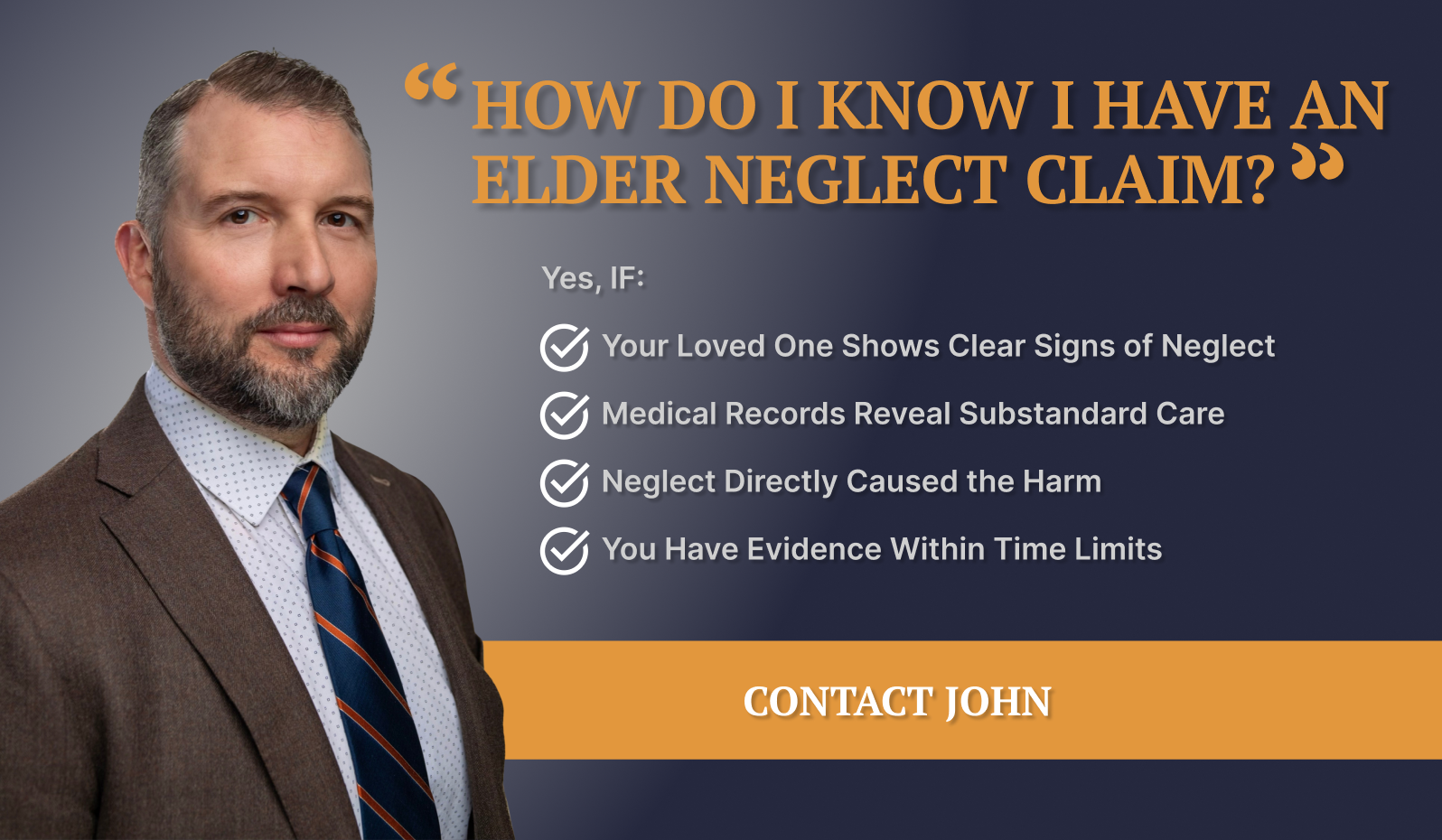
"How Do I Know I Have an Elder Neglect Claim?"
Your Loved One Shows Clear Signs of Neglect
You likely have a claim if your family member developed bedsores, experienced unexplained weight loss, suffered repeated falls, shows dehydration, or displays poor hygiene. These symptoms indicate the facility failed basic care duties including repositioning, nutrition, supervision, and hygiene assistance.
Medical Records Reveal Substandard Care
A strong claim exists when records show the nursing home violated care standards through contradictions between doctor’s orders and actual care delivered, missed medications, untreated infections, and gaps in nursing notes. Documentation of repeated hospital transfers or developing pressure sores demonstrates negligence.
Neglect Directly Caused the Harm
You must prove the facility’s neglect directly caused injuries—not pre-existing conditions. Examples include bedsores developing after admission from lack of repositioning, medication errors causing adverse reactions, or falls from inadequate supervision.
You Have Evidence Within Time Limits
Your claim is viable when you’ve documented neglect through photographs, incident logs with dates, witness statements, inspection reports, and medical records. File your claim within Nevada’s medical malpractice statute of limitations, which is 4 years from the time of incident or injury – 2 years from the date of discovery or when it should have been discovered.
Strong cases show patterns of systemic neglect, especially with understaffing evidence
Questions? Call John at Bemis Law Group for a free, confidential, no-obligation consultation. Available 24/7 to answer your questions about your claim (702) 637-3333.
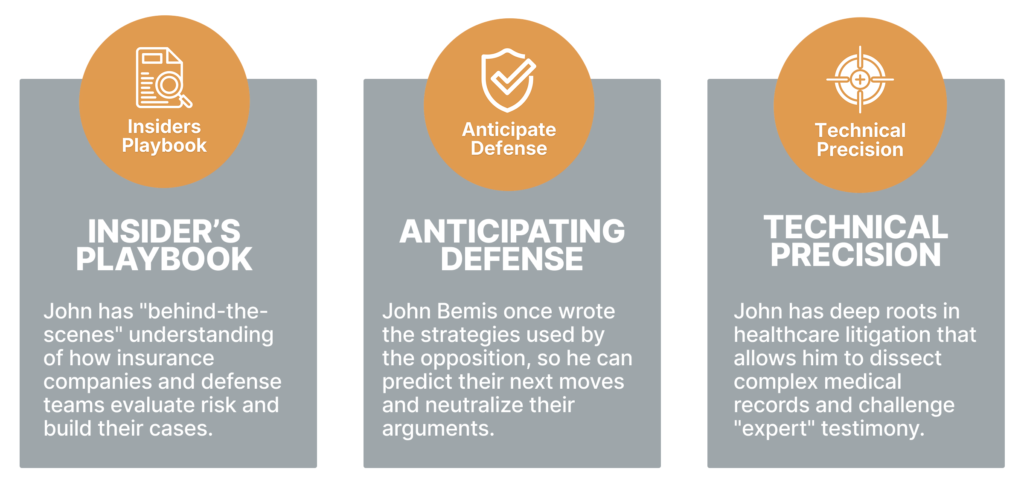
Nevada Laws Protecting Nursing Home Residents
Nevada has strict laws requiring nursing homes to meet minimum care standards and protecting residents’ rights. When facilities violate these laws through neglect, families can pursue civil lawsuits for medical malpractice and negligence.
Nevada Revised Statutes establish that nursing homes must provide adequate staffing, proper nutrition and hydration, medical care, hygiene assistance, safe environments, and protection from preventable injuries. Facilities that fail these duties can face both regulatory penalties and civil liability.
How to Sue a Nursing Home for Neglect
Many families ask “Can I sue a nursing home for neglect?” The answer is yes when you can prove four key legal elements:
The Facility Owed a Duty of Care
Once your loved one becomes a resident, the nursing home assumes a legal duty to provide care meeting professional standards. This duty exists through the admission agreement and Nevada regulations governing long-term care facilities.
The Facility Breached That Duty
Breach occurs when the nursing home fails to meet minimum care standards through understaffing, inadequate training, poor policies, or deliberate cost-cutting that compromises resident safety. Examples include leaving residents in soiled diapers for hours, failing to reposition immobile residents to prevent bedsores, ignoring call lights, withholding adequate food and water, and not providing necessary medical treatment.
The Breach Directly Caused Harm
You must prove the facility’s neglect directly caused your loved one’s injuries, not pre-existing conditions or unavoidable health declines. For instance, showing that stage 4 bedsores developed after admission due to lack of repositioning, or that dehydration and resulting kidney failure occurred because staff didn’t provide adequate fluids.
Your Family Suffered Damages
Nursing home neglect damages include medical expenses for treating preventable conditions, pain and suffering your loved one endured, emotional distress for both the victim and family members, costs of transferring to a better facility, and in tragic cases, wrongful death when neglect proves fatal.
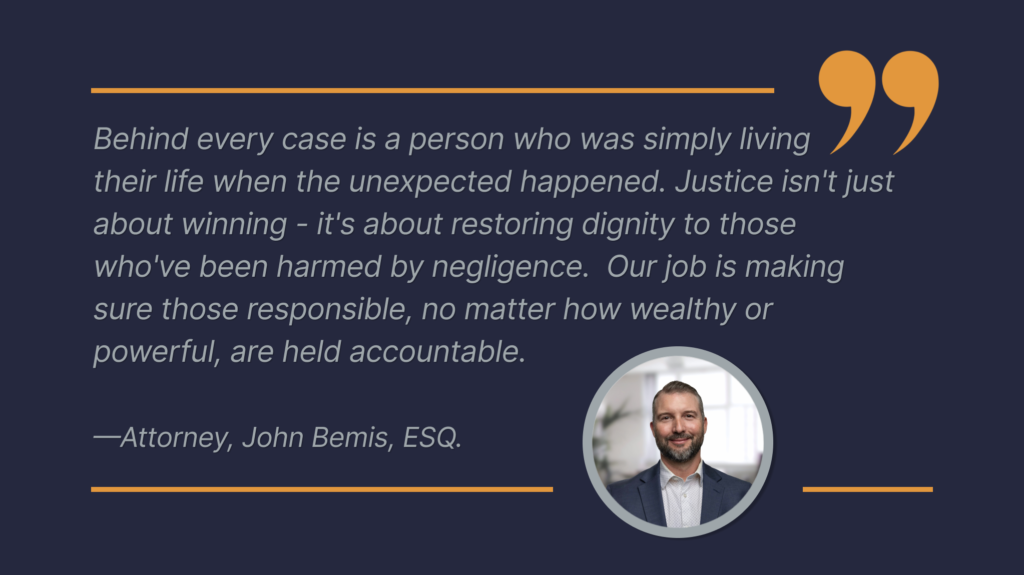
Why Nursing Home Neglect Happens in Las Vegas
Understanding why neglect occurs helps identify liable parties and strengthen your case.
Chronic understaffing is the primary cause of nursing home neglect. When facilities don’t hire adequate staff to handle the resident population, workers become overwhelmed and basic care tasks get skipped. Residents wait hours for help using the bathroom, don’t get repositioned to prevent bedsores, and call lights go unanswered.
Inadequate training leaves staff unprepared to recognize signs of deterioration or perform specialized care. Workers may not understand proper techniques for preventing bedsores, identifying dehydration, or safely transferring residents with mobility limitations.
Profit-driven management prioritizes financial returns over resident wellbeing. Corporate-owned nursing home chains often cut labor costs to maximize profits, resulting in dangerous staff-to-resident ratios that make quality care impossible.
Poor policies and procedures create environments where neglect flourishes. Facilities without clear protocols for monitoring residents, documenting care, and responding to emergencies struggle to maintain consistent standards across all shifts.
Lack of oversight and accountability allows neglectful patterns to continue unchecked. When complaints are ignored, incidents aren’t reported, and problems aren’t addressed, residents remain in danger.
What to Do If You Suspect Nursing Home Neglect
If you’ve noticed warning signs of neglect, take immediate action to protect your loved one.
Free no-obligation, confidential, consultation with Bemis Law Group.
Call John at (702) 637-3333.
Document everything by taking photos of visible injuries, bedsores, or unsanitary conditions during visits. Write down dates, times, and descriptions of concerning observations. Note your loved one’s complaints and any changes in their physical or mental condition.
Report to authorities by filing complaints with the Nevada Aging and Disability Services Division, which investigates nursing home violations. Serious abuse or immediate danger warrants calling local law enforcement.
Seek medical attention for injuries or health problems your loved one has developed. Independent medical evaluations document the extent of harm and establish the connection between neglect and injuries.
Consider emergency transfer if your family member is in immediate danger. While not always possible due to bed availability and health conditions, moving to a better facility stops ongoing harm.
Consult a nursing home neglect lawyer in Las Vegas to understand your legal options. An experienced attorney can investigate what happened, preserve evidence before it disappears, deal with the facility’s legal team, and pursue compensation to hold them accountable.
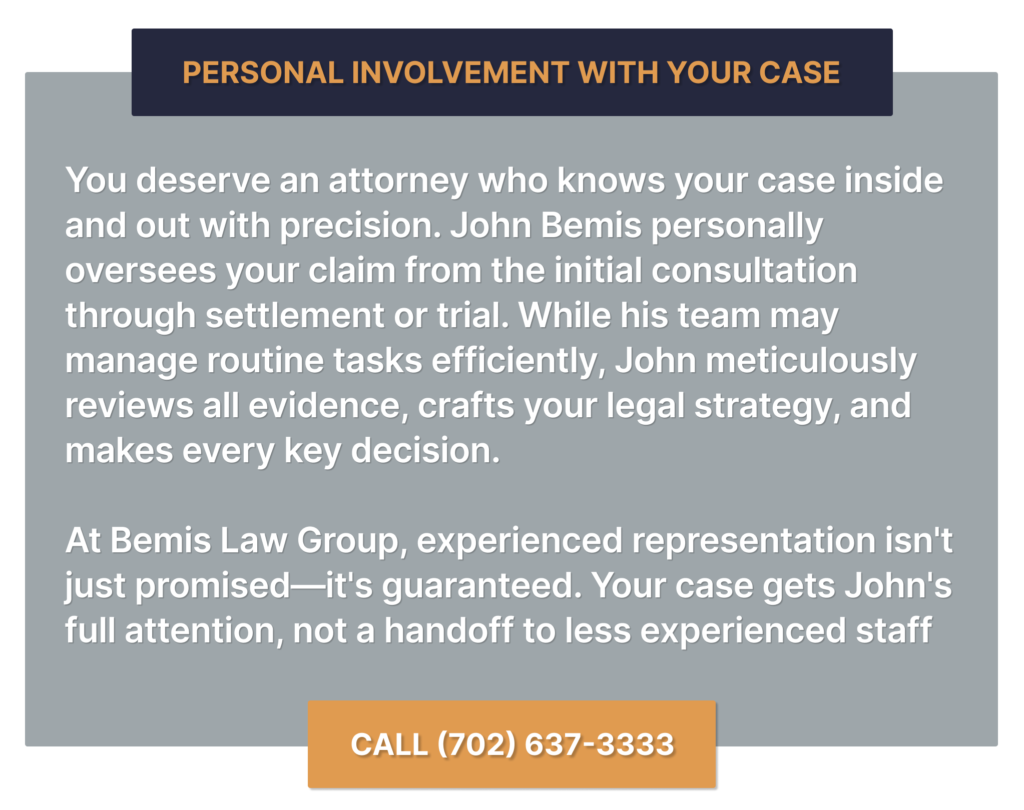
Choose Bemis Law Group for Your Las Vegas Nursing Home Neglect Case
When your loved one has suffered from nursing home neglect in Nevada, you need an attorney who combines legal expertise with genuine compassion for elder abuse victims.
Bemis Law Group handles nursing home negligence cases throughout Las Vegas with a thorough approach that includes investigating facility records, staffing levels, inspection reports, and complaint histories. The firm works with medical experts who review your loved one’s injuries and treatment to establish how neglect caused preventable harm.
Attorney John Bemis personally manages each case, ensuring your family receives dedicated attention during this difficult time. The firm understands the emotional toll of discovering your loved one has been neglected and works to achieve both justice and compensation. Bemis Law Group operates on contingency for elder abuse and nursing home negligence cases, meaning you pay nothing unless compensation is recovered. This removes financial barriers and ensures the attorney’s interests align with your family’s goals.
We Fight For Your Justice and Financial Security
Nursing home neglect is never acceptable. If your family member has experienced weight loss, bedsores, falls, dehydration, poor hygiene, or personality changes while in a Las Vegas nursing home, you need answers about whether inadequate care violated Nevada law. Don’t wait while neglect continues or evidence disappears. Contact Bemis Law Group today at (702) 637-3333 for a free, confidential consultation with an experienced nursing home neglect lawyer in Las Vegas. Learn your legal rights, understand your options for pursuing accountability, protect your loved one and secure the compensation your family deserves! Available 24/7.
Protect your RIGHTS, get the MAXIMUM compensation you deserve, and fight for JUSTICE with an experienced Las Vegas, Nevada medical malpractice attorney and trusted personal injury lawyer on your side.
Free no-obligation, confidential, consultation with Bemis Law Group. Call John at (702) 637-3333.
Searching for the best medical malpractice lawyer near me? Find us on Google Maps!