
Bus Accident Lawyer
Work with the best 24/7. Maximize your compensation.
Bus Accident Lawyer in Las Vegas
Whether you’re riding RTC’s The Deuce double-decker along the Strip, taking the SDX express to Downtown, commuting on a local transit bus, riding a school bus, traveling on a charter coach, or even celebrating on a party bus, you trust these large vehicles to transport you safely.
When bus crashes occur due to driver negligence, mechanical failures, or other preventable causes, passengers and nearby motorists face serious injuries with complex legal implications. Understanding who is at fault isn’t as straightforward as typical car crashes. Liability may involve city governments, school districts, private transit companies, charter bus operators, maintenance contractors, or vehicle manufacturers. These defendants have powerful legal teams and significant resources dedicated to minimizing their liability.
Were you or a loved one seriously injured by negligence? Contact John at Bemis Law Group for a free no-obligation, confidential, consultation at (702) 637-3333.

Types of Buses Operating in Las Vegas
Understanding the different bus types helps identify responsible parties and applicable laws.
RTC Public Transit Buses
The Regional Transportation Commission of Southern Nevada operates the public bus system serving Las Vegas and surrounding communities.
The Deuce is the iconic double-decker bus running 24/7 along Las Vegas Boulevard, connecting the Strip and Downtown. These distinctive buses carry millions of tourists and locals annually through the city’s busiest corridors.
SDX (Strip & Downtown Express) provides faster service between the Strip and Downtown Las Vegas with fewer stops than The Deuce. These articulated buses offer more spacious seating and quicker travel times.
Local Routes serve residential areas, shopping centers, hospitals, and business districts throughout the Las Vegas valley. These standard transit buses connect communities to employment centers and essential services.
Accidents involving RTC buses create potential claims against government entities, requiring compliance with specific notice requirements and procedures.
School Buses
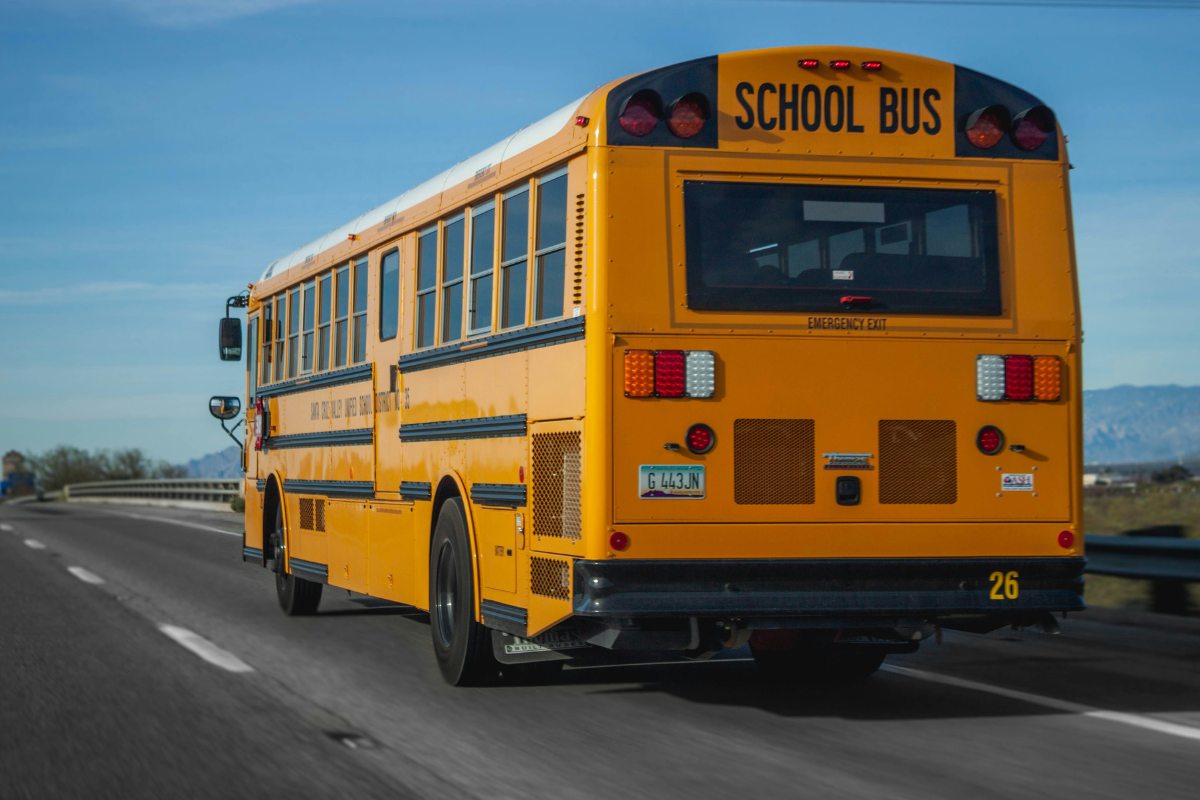
Clark County School District and private schools operate hundreds of school buses transporting students daily. School bus accidents raise particularly serious concerns because they involve children, and special regulations govern school bus operations.
School zone bus rules require drivers to stop when buses display flashing red lights and stop arms, prohibit passing stopped school buses in most situations, and mandate reduced speeds in school zones during designated hours.
When school bus accidents occur, liability may involve the school district, private contractors operating buses, bus drivers, other motorists, or bus manufacturers.
Charter and Tour Buses
Las Vegas sees constant charter bus traffic from tour companies bringing visitors to attractions, luxury coaches transporting groups to shows and events, party buses for celebrations and special occasions, and casino shuttle buses moving guests between properties.
These commercial operations involve private companies responsible for driver training, vehicle maintenance, and passenger safety. Charter bus accidents often involve interstate travel, potentially triggering federal regulations.
Long-Distance Bus Services
Greyhound, FlixBus, and other intercity carriers connect Las Vegas to California, Arizona, and destinations throughout the country. These buses travel at highway speeds carrying passengers long distances, meaning accidents can be particularly severe.
Long-distance bus companies must comply with federal motor carrier safety regulations similar to trucking companies.
If you’ve been injured in a bus accident in Las Vegas or anywhere in Nevada, knowing the types of bus collisions, how to file a claim after bus accident incidents, and why you need a specialized bus crash attorney protects your rights and maximizes your compensation.
Common Bus Collision Types
Understanding how bus accidents occur helps establish liability and causation.
Rear-End Collisions
Buses frequently stop to pick up and drop off passengers, creating risks of rear-end crashes when following drivers don’t notice stopped buses or can’t stop in time. The large size and bright markings of buses mean drivers who rear-end them are typically at fault for inattention or following too closely.
Side-Impact Collisions
T-bone crashes at intersections cause serious injuries to bus passengers seated on the impact side. Side-impact collisions occur when other drivers run red lights, fail to yield, or misjudge gaps when turning across bus paths.
Pedestrian and Bicycle Accidents
Buses interact constantly with pedestrians at stops and crosswalks and cyclists sharing roadways. Accidents occur when bus drivers fail to check blind spots, don’t yield to pedestrians in crosswalks, or turn without seeing cyclists.
Rollover Accidents
While less common than with smaller vehicles, bus rollovers do occur when drivers take curves too fast, overcorrect during emergency maneuvers, or when mechanical failures affect steering or stability. Rollovers create mass casualty situations with multiple serious injuries.
Passenger Falls
Many bus accident injuries don’t involve collisions with other vehicles. Passengers fall when buses brake suddenly, accelerate quickly before passengers are seated, or take turns sharply. Elderly passengers and those with mobility limitations face particular risks from sudden movements.
Falls also occur while boarding or exiting buses with poorly maintained steps, inadequate handrails, or drivers who pull away before passengers are safely seated.
Multi-Vehicle Crashes
Buses’ large size means accidents often involve multiple vehicles. When buses collide with cars, the physics of 20-ton buses striking 3,000-pound cars creates devastating impacts for smaller vehicle occupants.
Backing Accidents
Buses regularly back up in terminals, parking lots, and when maneuvering in tight spaces. Limited rear visibility creates risks to pedestrians, cyclists, and vehicles behind buses.
Common Vehicle Accident FAQs in Nevada
Your actions right after a car crash can significantly impact your health, safety, and ability to recover compensation. Here’s what you need to do:
At the scene:
- Stop and stay: Nevada law requires you to remain at the scene of any accident involving injuries or significant property damage—leaving can result in criminal charges.
- Call 911: Report the accident immediately, especially if anyone is injured or there’s substantial vehicle damage. A police report is critical for your insurance claim and legal case.
- Check for injuries: Assess yourself and others for injuries and move to safety away from traffic if possible.
- Document everything: Take photos and videos of all vehicles, damage, skid marks, road conditions, traffic signs, injuries, and license plates. Collect names and contact information from witnesses.
- Exchange information: Get the other driver’s name, insurance details, license plate, and contact information—but don’t admit fault or apologize, as statements can be used against you.
After leaving the scene:
- Seek medical attention immediately, even if you don’t feel injured—many serious injuries like whiplash, concussions, or internal damage don’t show symptoms right away, and gaps in treatment can hurt your claim.
- Notify your insurance company but avoid giving recorded statements or accepting quick settlement offers without consulting an attorney first.
Contact us at Bemis Law Group, with an expert Las Vegas car accident lawyer to protect your rights and maximize your compensation, especially if injuries are serious or fault is disputed. Call (702) 637-3333.
Nevada is a fault-based state, meaning the driver who caused the accident is legally and financially responsible for all damages, including medical bills, lost wages, vehicle repairs, and pain and suffering. Insurance companies determine fault by reviewing police reports, witness statements, photos, traffic violations, and medical records.
Nevada uses a modified comparative negligence rule (NRS 41.141), which means you can still recover compensation even if you were partially at fault—as long as you are less than 50% responsible for the accident. However, your compensation will be reduced by your percentage of fault.
Example: If you’re found 20% at fault and your total damages are $100,000, you can recover $80,000 (reduced by your 20% share). But if you’re 50% or more at fault, you cannot recover anything from the other driver.
Hiring an experienced Las Vegas car accident attorney at Bemis Law Group is crucial—we investigate the car crash, gather evidence, challenge unfair fault determinations, and fight to minimize your percentage of responsibility so you can recover the maximum compensation you deserve. Call (702) 637-3333.
In Nevada, you generally have two years from the date of the crash to file a lawsuit for personal injuries or wrongful death caused by a motor vehicle accident under NRS 11.190(4)(e). If you are only claiming property damage (vehicle damage), you usually have three years from the accident date. Waiting past these deadlines almost always means losing your right to recover compensation in court.
Contact us at Bemis Law Group, with an expert Las Vegas car accident lawyer to protect your rights and maximize your compensation, especially if injuries are serious or fault is disputed. Call (702) 637-3333.
Truck cases are more complex because multiple parties may be liable—the truck driver, trucking company, cargo loader, maintenance contractor, or even the manufacturer. These cases often involve severe injuries, commercial insurance policies, federal trucking regulations, and critical evidence like driver logs and black-box data, so it is important to investigate quickly and identify every responsible party.
Liability depends on who caused the crash and, for rideshare drivers, what “period” they were in on the app. If the rideshare driver was at fault and was picking up or transporting a passenger, Uber and Lyft carry up to $1.5 million in commercial liability coverage; if another driver was at fault, their insurance is primary, and the rideshare or taxi coverage may apply if the at-fault driver is underinsured.
Contact us at Bemis Law Group, with an expert Las Vegas car accident lawyer to protect your rights and maximize your compensation, especially if injuries are serious or fault is disputed. Call (702) 637-3333.
Yes. Injured passengers, pedestrians, and occupants of other vehicles can pursue claims against the bus driver, bus company, or, for public transit, the responsible government entity if negligence caused the crash. Bus cases can have special notice and timing rules—especially when a city or regional transit agency is involved—so it is important to act quickly to preserve your rights.
Motorcycle claims follow the same basic negligence and statute-of-limitations rules—two years for injury or death—but riders often face bias from insurers who try to blame them. Nevada’s comparative negligence system means your compensation can be reduced if you are found partially at fault, so gathering evidence (scene photos, witness statements, crash reports) is critical to protect a motorcyclist’s claim.
Contact us at Bemis Law Group, with an expert Las Vegas motorcycle accident lawyer to protect your rights and maximize your compensation, especially if injuries are serious or fault is disputed. Call (702) 637-3333.
If a driver’s negligence—such as speeding, failing to yield, or distracted driving—causes a pedestrian injury, you can pursue compensation for medical bills, lost wages, pain and suffering, and other losses. You usually have two years to file a personal injury or wrongful death lawsuit, and Nevada’s comparative negligence rules apply, so the driver can try to argue you were partly at fault for where or how you crossed.
Free legal consultation with a bus accident attorney
Work with Las Vegas’ best.
Hire the Best Bus Accident Lawyer In Las Vegas
We handle every aspect of your claim—from investigating fault to negotiating with insurance companies—so you can focus on recovery. If you’ve been hurt in a bus accident, you don’t have to face it alone. And like most Vegas personal injury lawyers, we work on a contingency fee basis, meaning we only get paid if you win your case. And we’ll help you understand your fee structure upfront. NO WIN, NO FEE!
Bemis Law Group is a trusted advocate for victims of bus accidents in Las Vegas. Our experienced legal team fights to secure maximum compensation for those injured whether it’s in a car, truck, motorcycle, or rideshare collisions. An experienced bus accident attorney can:
- Pursue maximum compensation
- Explain your options
- Evaluate the case and examine its risks
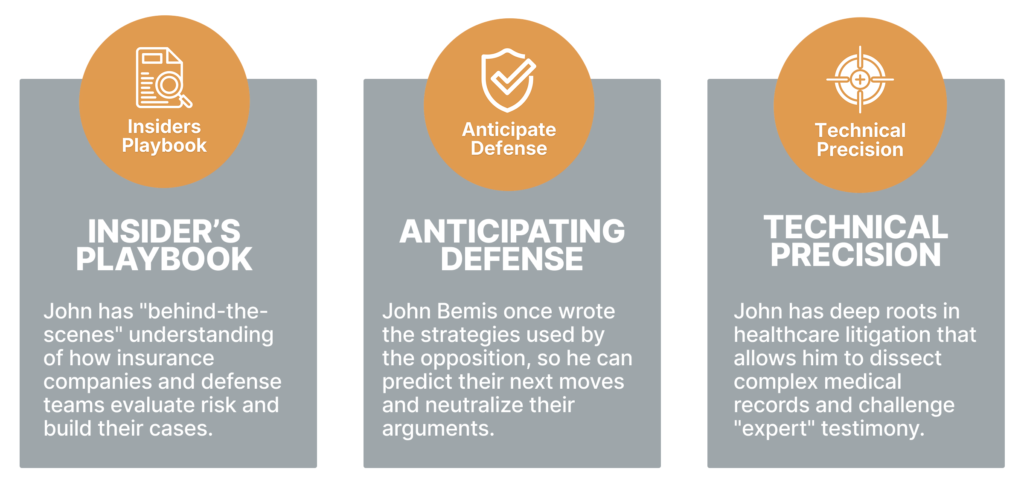
- Anticipate the defense
- Provide top medical care
- Dissect complex medical records
We go beyond basic representation to build strong, results-driven cases for our clients. Our team investigates every detail of your accident—reviewing police reports, medical records, and witness statements—to uncover the full extent of your damages. We consult with medical and financial experts to calculate future medical needs, lost wages, and long-term impacts, ensuring no loss is overlooked. Then, we negotiate aggressively with insurance companies and, when necessary, take cases to trial to demand the full value you deserve. Our mission is simple: maximize your compensation and help you rebuild your life after a serious accident.
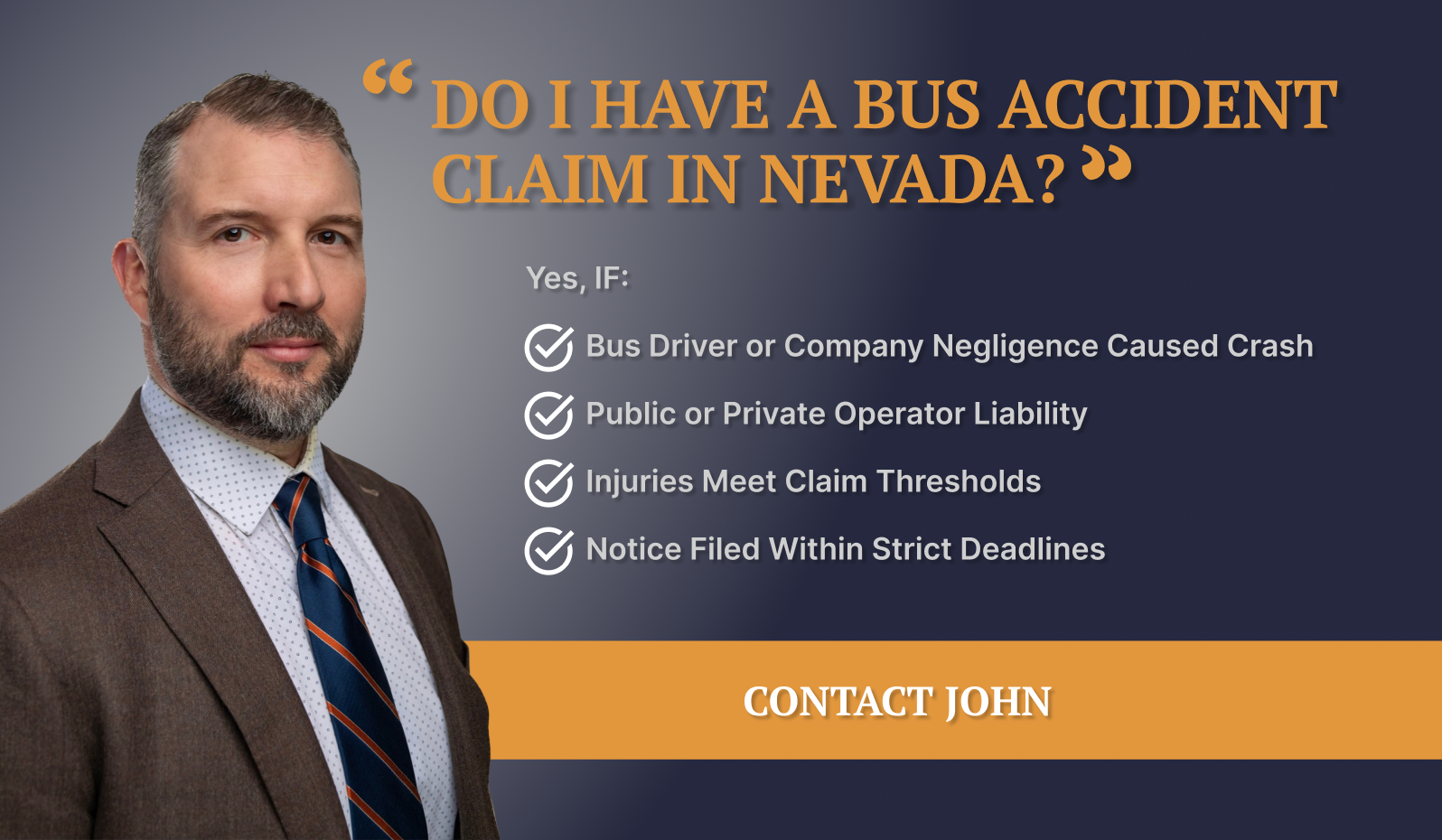
“How Do I Know I Have a Bus Accident Claim?”
Bus Driver or Company Negligence Caused Crash
You may have a bus accident claim if the driver was speeding, distracted, or fatigued, or if the company skipped maintenance on brakes, tires, or safety systems leading to the wreck.
Public or Private Operator Liability
You may have a claim against RTC, school districts, or private charters, as Nevada holds government entities to shorter notice periods but same negligence standards for passenger safety.
Injuries Meet Claim Thresholds
You may have a claim if the collision caused fractures, head trauma, or spinal damage with medical bills over $750, backed by passenger manifests and incident reports.
Notice Filed Within Strict Deadlines
You may have a claim if you submitted a government tort claim within 6 months for public buses, preserving rights to pursue damages for lost income and lifelong care.
Questions? Call John at Bemis Law Group for a free, confidential, no-obligation consultation. Available 24/7 to answer your questions about your claim (702) 637-3333.
Bus Accident Injuries
The unique characteristics of bus crashes create specific injury patterns.
Injuries from Lack of Seatbelts
Most buses don’t require passenger seatbelts, meaning occupants become projectiles during crashes. Passengers are thrown from seats, strike interior surfaces, or collide with other passengers, causing head injuries and concussions, spinal injuries, broken bones and fractures, internal injuries, and lacerations and bruising.
Whiplash and Neck Injuries
Sudden stops, starts, or impacts cause severe whiplash as passengers’ heads snap forward and backward. What seems like minor neck strain can develop into chronic pain and limited mobility.
Crush Injuries
Passengers trapped in wreckage or struck by collapsing bus structures sustain crush injuries causing broken bones, internal organ damage, vascular injuries, and soft tissue damage requiring extensive treatment.
Traumatic Brain Injury
Head impacts against windows, seats, or poles cause traumatic brain injuries ranging from concussions to severe brain trauma with permanent cognitive impairment.
Spinal Cord Injuries
Violent crashes can fracture vertebrae or damage spinal cords, causing temporary or permanent paralysis. These catastrophic injuries require lifetime medical care.
Psychological Trauma
Bus accident survivors often experience post-traumatic stress disorder, anxiety about riding buses or traveling, depression, and sleep disturbances requiring psychological treatment.
Who Is at Fault in a Bus Accident?
Determining liability in a bus crash in Nevada requires understanding the complex relationships between drivers, companies, government entities, and third parties.
The Bus Driver
Driver negligence causes many bus accidents through distracted driving including phone use, speeding or unsafe speeds for conditions, failure to yield right-of-way, running red lights or stop signs, improper lane changes, fatigue from excessive work hours, and impaired driving from alcohol or drugs.
Commercial bus drivers must meet higher standards than regular motorists, holding commercial driver’s licenses and following federal hours-of-service rules for longer-distance routes.
Transit Agencies and Bus Companies
RTC, school districts, and private bus companies can be liable for their own negligence separate from driver actions. Negligent hiring of drivers without proper background checks, inadequate driver training, pressuring drivers to maintain unrealistic schedules, failing to maintain buses properly, operating unsafe or defective buses, and ignoring driver complaints about mechanical problems all create company liability.
Government Entities
Claims against RTC or school districts involve suing government entities, which triggers special rules. Nevada law requires filing notice of claims against governmental entities within specific timeframes—often as short as 180 days. Missing these deadlines bars your claim permanently regardless of its merits.
Government defendants also enjoy certain immunities that don’t apply to private parties, making these cases more complex.
Maintenance Companies
Third-party contractors hired to maintain and repair buses can be liable when negligent maintenance contributes to accidents. Failing to properly repair brakes, steering, or critical systems, using defective or substandard parts, and falsifying inspection records create liability.
Bus and Parts Manufacturers
Defective bus components cause accidents when brake failures, tire blowouts, steering system defects, door malfunctions, and other mechanical failures occur. Product liability claims against manufacturers provide additional avenues for compensation.
Other Drivers
When other Nevadan motorists cause bus accidents through negligence, they can be held liable. Common scenarios include cars running red lights and striking buses, drivers failing to stop for school buses with activated stop signs, and vehicles cutting off buses causing crashes.
How to File a Claim After Bus Accident in Nevada
The steps you take after bus crashes significantly impact your ability to recover compensation.
Ensure Safety and Call 911
Check for injuries and call police immediately. Bus accidents often involve multiple injuries requiring emergency response. Official police reports document the accident and create important evidence.
Document Everything
Take photos of the bus including company name and vehicle number, accident scene and vehicle positions, visible injuries, interior damage or hazards, and weather and road conditions.
Get contact information from the bus driver, other involved drivers, and witnesses who saw the accident.
Report Your Injuries
Tell first responders about all pain and symptoms, even those seeming minor. Bus accidents’ chaotic nature means injuries can be overlooked without thorough evaluation.
Seek Immediate Medical Care
Go to an emergency room even if you declined ambulance transport. Many bus accident injuries including internal injuries, concussions, and soft tissue damage don’t show immediate symptoms but require prompt treatment.
Medical documentation immediately after accidents establishes that injuries were caused by the crash.
Preserve Evidence
Keep your bus ticket or transit pass, all medical records and bills, correspondence with insurance companies, and any notices from the transit agency or bus company.
Request copies of accident reports from police and the transit agency.
File Required Notices for Government Claims
If your accident involved RTC buses, school buses, or other government-operated vehicles, Nevada law requires filing formal notices of claim within 180 days. These notices must include specific information about the accident, injuries, and damages.
Failing to properly file these notices within deadlines permanently bars claims against government entities, regardless of how serious your injuries or clear the government’s fault.
Consult a Local Bus Crash Attorney
Before making statements to insurance adjusters or accepting settlement offers, consult an experienced bus accident lawyer in Vegas. These cases involve complex liability, multiple defendants, special procedures for government claims, and often significant damages requiring thorough evaluation.
Most Las Vegas bus crash attorneys offer free consultations and work on contingency, charging fees only if they recover compensation.
Evidence in Bus Accident Cases
Building strong bus accident claims requires comprehensive evidence proving negligence and damages.
Black Box Data
Modern buses are equipped with event data recorders (black boxes) capturing speed, braking, acceleration, and other critical information before and during crashes. This electronic data objectively proves how accidents occurred and whether drivers acted negligently.
Experienced bus accident lawyers know how to obtain and preserve this data before it’s overwritten or destroyed.
Maintenance Records
Bus companies and transit agencies must maintain detailed records of vehicle inspections, repairs, and maintenance. These records show whether buses were properly maintained or operated with known defects.
Gaps in maintenance records or deferred repairs that contributed to accidents establish negligence.
Camera Footage
Many buses have interior and exterior cameras recording what happens before, during, and after crashes. This footage proves whether drivers acted safely, how passengers were injured, and what conditions existed.
Additionally, traffic cameras, business security cameras, and other surveillance near accident scenes may capture crashes.
Driver Qualification Files
Commercial bus drivers’ personnel files contain licenses, training records, driving histories, previous accidents, disciplinary actions, and medical qualification certificates.
These records can prove patterns of unsafe driving or company negligence in hiring or retaining dangerous drivers.
Federal and State Inspection Reports
Buses undergo regular safety inspections. Inspection reports showing violations or defects prove vehicles weren’t roadworthy.
Witness Statements
Passenger accounts, other motorists who saw the accident, and pedestrians all provide important testimony about how crashes occurred and who was at fault.
You Need Lawyers Who Understand Complex Bus Accident Liability in Nevada
Bus accident cases require specialized knowledge and resources beyond standard car crash claims.
Knowledge of Government Claim Procedures
Claims against RTC or school districts involve strict notice requirements, short deadlines, and special procedures. Attorneys experienced with government claims ensure compliance with all requirements protecting your rights.
Understanding of Federal Transportation Regulations
Interstate bus companies must comply with Federal Motor Carrier Safety Administration regulations governing driver qualifications, hours of service, vehicle maintenance, and safety standards. Attorneys familiar with these federal rules know how to prove violations establishing negligence.
Ability to Handle Corporate Defendants
Private bus companies and their insurers have experienced defense lawyers protecting their interests. You need equally skilled representation investigating thoroughly, hiring expert witnesses, accurately valuing your claim, and negotiating aggressively.
Resources for Comprehensive Investigation
Bus accident cases require immediate investigation to preserve evidence, access to experts including accident reconstructionists, mechanical engineers, and medical specialists, ability to obtain black box data and company records, and financial resources to fully develop complex cases.
Choose Bemis Law Group as Your Bus Crash Attorney
When bus accidents cause injuries in Las Vegas or anywhere in Nevada, you need attorneys who understand both the devastating human impact and the legal complexities these cases present.
Bemis Law Group handles bus accident cases involving RTC transit buses, school buses, charter buses, tour buses, and long-distance carriers throughout Nevada.
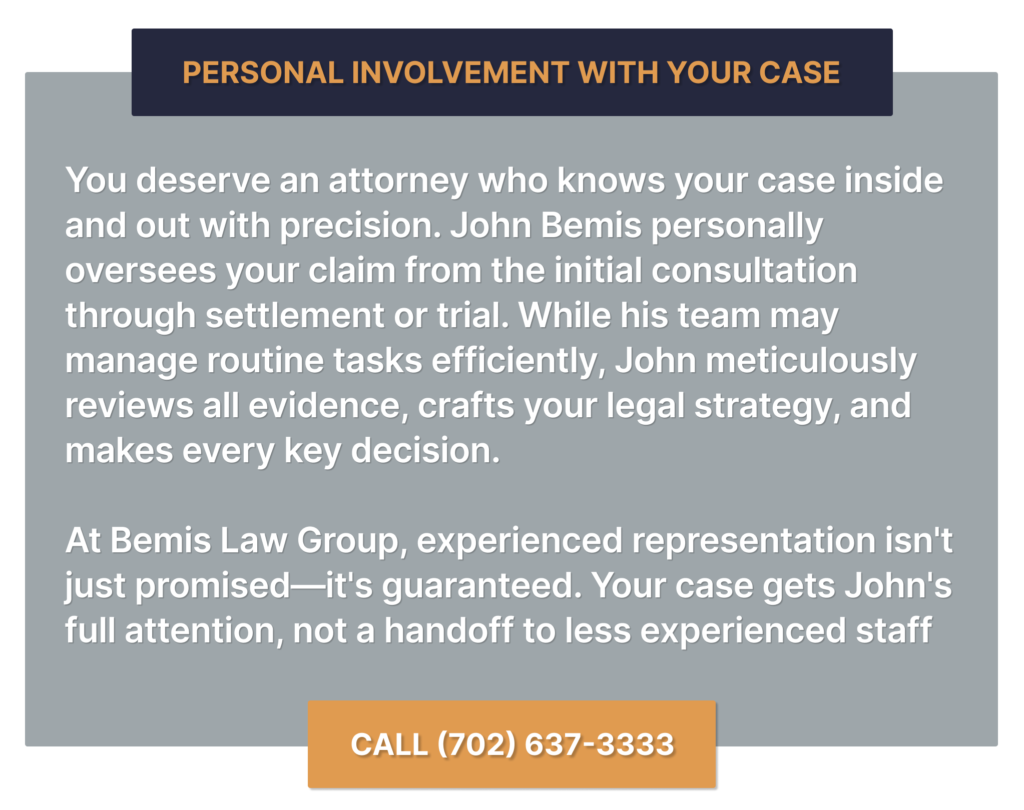
Attorney John Bemis personally manages each case, ensuring clients receive dedicated attention. He understands government claim requirements and deadlines, knows how to obtain critical evidence like black box data and maintenance records, fights corporate and government defendants effectively, and accurately values all damages including long-term medical needs and lost earning capacity.
We Fight For Your Justice and Financial Security
Whether you suffered injuries as a passenger, pedestrian, or occupant of another vehicle, Bemis Law Group has the experience to handle your bus accident case effectively. His firm works on contingency and offers free consultations, removing financial barriers to expert legal representation.
If you were injured in a bus accident in Las Vegas or anywhere in Nevada, time is critical. Government claim deadlines approach quickly, evidence disappears, and Nevada’s statute of limitations limits how long you can file lawsuits.
Contact Bemis Law Group today for your free consultation. Get answers about who is at fault in your bus accident, understand the claim process, and take the first step toward fair compensation.
Available 24/7 throughout Nevada because questions about bus accidents can’t wait for business hours.
Protect your RIGHTS, get the MAXIMUM compensation you deserve, and fight for JUSTICE with an experienced Las Vegas, Nevada medical malpractice attorney and trusted personal injury lawyer on your side.
Free no-obligation, confidential, consultation with Bemis Law Group. Call John at (702) 637-3333.
Searching for the best vehicle accident lawyer near me? Find us on Google Maps!